If you have been looking for hunting land in Mississippi, you have probably noticed the same pattern over and over: the best-looking properties get expensive fast, and lower-priced tracts often need more work than expected. That is exactly why Claiborne County deserves a closer look. For buyers who want strong habitat, larger acreage, and a lower price per acre than many nearby markets, this county has more going for it than its profile might suggest. Let’s dive in.
Claiborne County stands out on value
Claiborne County offers a combination that is getting harder to find in recreational land: big tracts and a lower entry point. Land.com’s county snapshot shows 28 properties totaling 8,256 acres for sale, with a median lot size of 218.5 acres, an average lot size of 375 acres, and a median price per acre of $3,832.
That pricing matters even more when you compare it to nearby benchmarks. The same data shows Claiborne County below the Mississippi median of $5,593 per acre and below the Capital River Mississippi regional median of $5,026 per acre. It also sits below Jefferson County, Hinds County, Warren County, and Adams County, which supports the case that buyers may find more acreage for the money here.
There is an important nuance, though. Those Land.com figures are based on listings over 10 acres and exclude commercial properties, so they are best used as a market snapshot, not closed-sale comps. Even so, the numbers point to a county where value is a real part of the story.
The landscape fits hunting use
Claiborne County’s geography helps explain why it appeals to hunting land buyers. County descriptions note that it is bordered by the Mississippi River on the west and the Big Black River on the north, and the Natchez Trace Parkway runs through the county between mileposts 32 and 61.
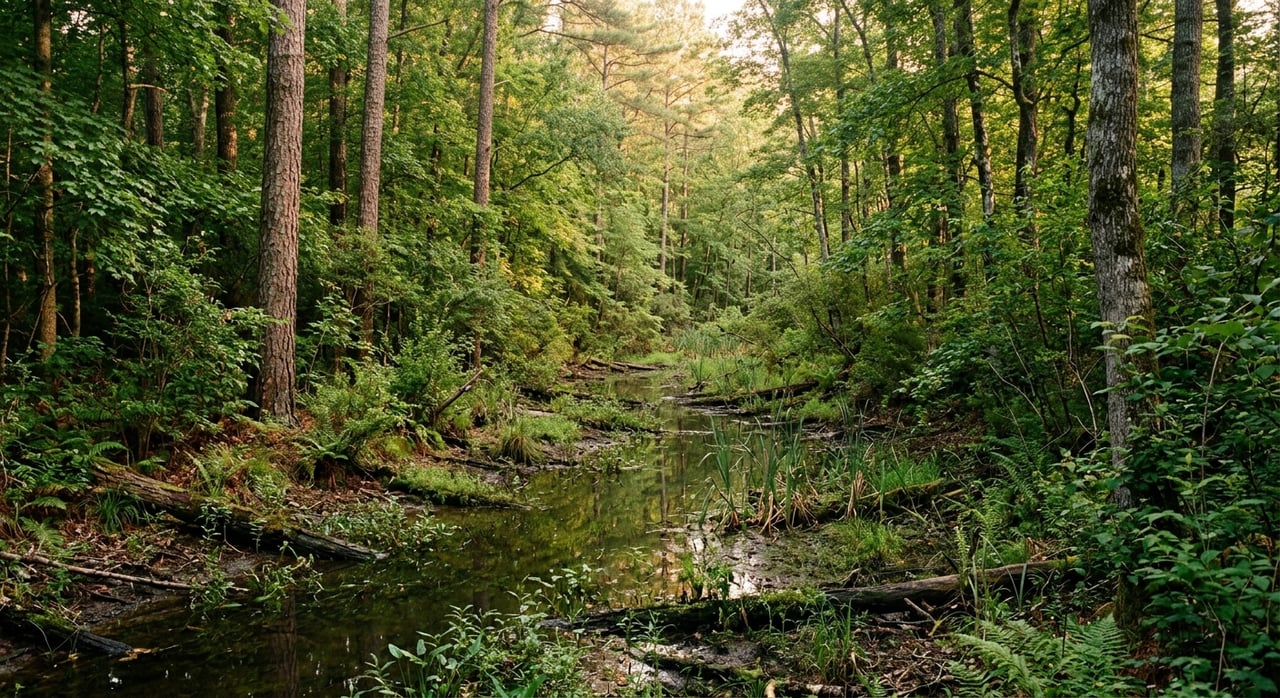
That setting gives the county a strong river-and-woods character. For you as a buyer, that often translates into the kind of terrain and cover that align well with recreational use, habitat diversity, and long weekends outdoors.
Habitat is more than just wooded acreage
A lot of rural land looks good in photos. What matters more is whether the habitat has the ingredients that support consistent use over time. In Claiborne County, the habitat story is stronger than a simple “it has trees” pitch.
The Mississippi Department of Wildlife, Fisheries, and Parks says Canemount WMA covers about 3,500 acres in the county’s Loess Bluffs near the Mississippi River. MDWFP also describes very deep fertile topsoil, a high component of cherrybark oak, and a long history of trophy deer management.
That same MDWFP information notes that streams, flood plains, and hardwood bottomlands provide essential wildlife habitat for deer, turkeys, rabbits, squirrels, and many migratory birds. For a private buyer, that is useful context because it shows the county’s broader landscape already supports the kind of habitat features hunters care about.
USDA data adds another important layer. In the 2022 Claiborne County profile, woodland accounts for 44,222 acres of land in farms, compared with 12,635 cropland acres and 7,963 pastureland acres. In plain terms, woodland is a major part of the county’s rural land base.
Larger tracts are normal here
One reason Claiborne County feels underrated is that its inventory often matches what serious land buyers actually want. Instead of being dominated by tiny, chopped-up parcels, the market tends to feature tracts measured in the hundreds of acres.
USDA’s county profile reports an average farm size of 392 acres and 25 farms at 1,000 acres or more. That lines up with current listing patterns showing a market where sizable holdings are not unusual.
This matters because tract size affects more than just bragging rights. Larger acreage can make it easier to manage access, set up hunting areas, maintain privacy, and think long term about timber, recreation, and future resale.
Many tracts already solve common hunting problems
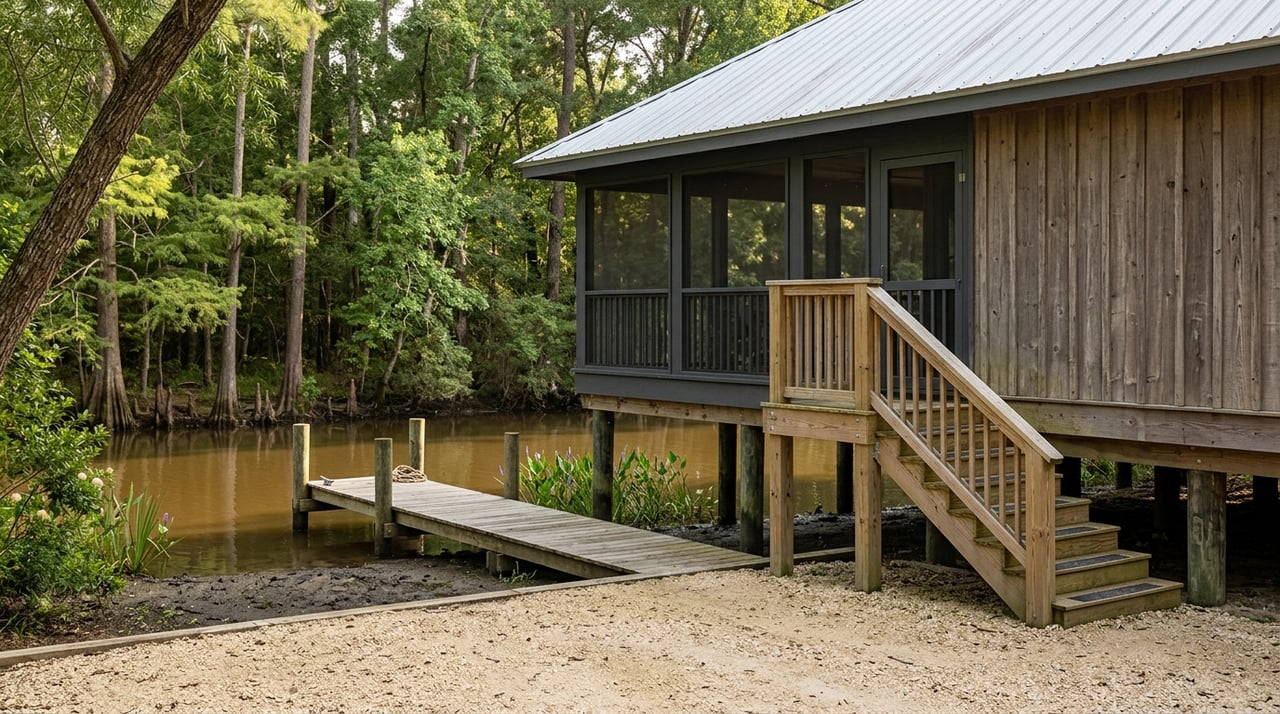
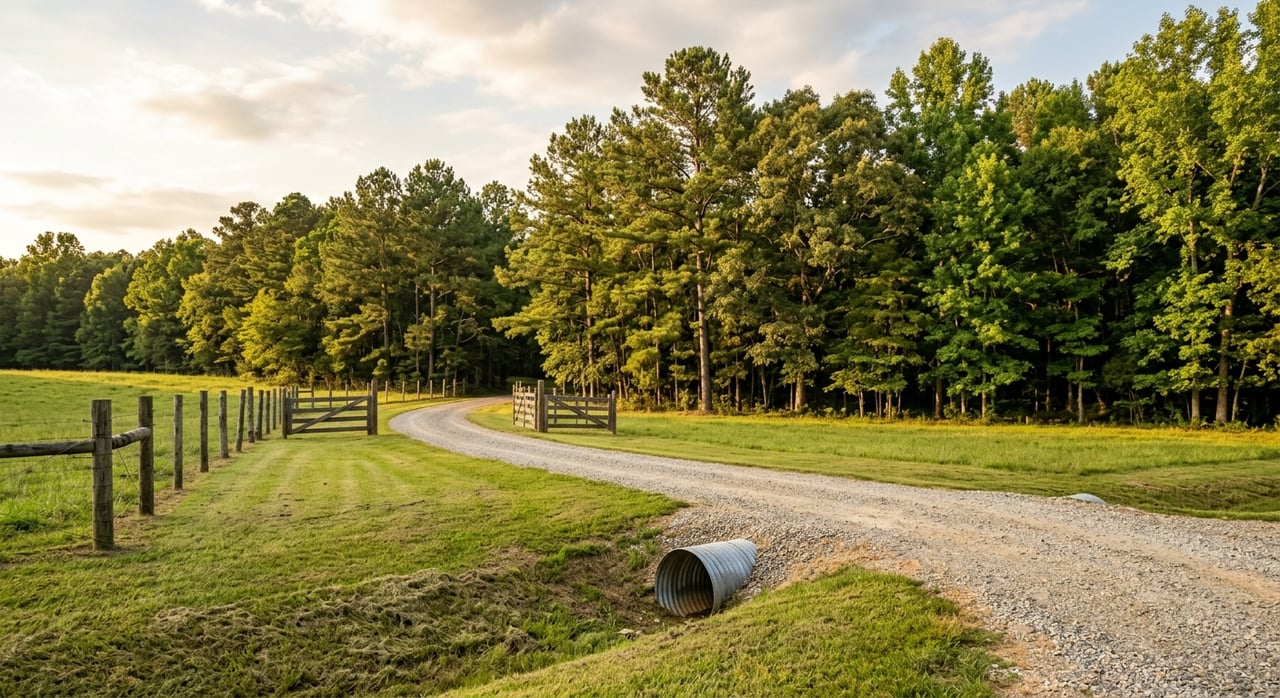
Another reason the county deserves more attention is the type of land that comes to market. Recent examples in Claiborne County include a 315-acre tract with an extensive interior road and trail system, a perimeter road, food plots, a gravel-bottom stream with steel bridges, and power to a cabin site.
Other examples include a 151-acre tract with paved frontage, newly built roads, food plots, and a year-round creek, plus a 984-acre tract with CRP income, mature hardwood timber, and a two-story cabin. Even a smaller 22-acre listing was described as uncommon for the county and still included a creek boundary and a food plot.
That pattern is important. It suggests buyers here are often looking at land where access, internal circulation, water, and basic hunting improvements are already part of the package, rather than starting from scratch on raw acreage.
Why “underrated” is the right word
Some counties become well-known hunting markets and attract steady buyer attention. That can push up prices and make it harder to find a tract that checks enough boxes without stretching your budget.
Claiborne County appears to sit in a different lane. The county has a hunter-friendly landscape, larger tract norms, and pricing below several nearby and regional benchmarks, yet it does not always get the same spotlight as some surrounding markets.
For you, that can create opportunity. If your goal is to find a tract with habitat potential and scale, while staying more disciplined on price per acre, Claiborne County is worth a serious search.
What buyers should verify before buying
Even in a market with strong land fundamentals, due diligence matters. Claiborne County’s river-bounded setting and the prevalence of creek-bottom hunting ground make property-level verification especially important.
Before you assume a tract is turnkey, take time to confirm:
- Flood exposure
- Road maintenance and year-round access
- Utility availability
- Seasonal usability
- Internal road and trail condition
- Water features and crossings
A listing may show roads, food plots, or a cabin site, but you still want to understand how the property functions in wet seasons and during active hunting use. That practical review can save you from buying a tract that looks better on paper than it performs in the field.
Claiborne County hunting rules to know
If you are buying hunting land here, you should also understand the local wildlife rules that affect use. Claiborne County is inside MDWFP’s Issaquena CWD Management Zone.
MDWFP says carcasses may not be transported outside any CWD management zone. If you plan to hunt the tract regularly, host others, or travel back and forth with harvested deer, that is a rule you need to factor into how you use the property.
Public hunting access is present in the county, but it is structured. MDWFP’s Canemount hunts use a limited-entry and permit system, which means public access exists but is controlled rather than wide open.
For private-land buyers, that can make features like privacy, access control, and habitat work feel even more valuable. It is one more reason private tracts with usable improvements can stand out in this market.
Who Claiborne County may fit best
This market may be a strong fit if you are looking for a recreational tract that balances lifestyle and long-term value. It can also make sense if you want a property large enough to support a more intentional setup, whether that means food plots, roads, creek access, a cabin site, or a mix of hunting and timber potential.
You may want to look especially closely at Claiborne County if your priorities include:
- More acreage for your budget
- A wooded, river-influenced landscape
- Existing hunting improvements on some tracts
- Larger parcel norms than many rural markets
- Space for long-term land use planning
Why local land guidance matters here
An underrated market is only a good opportunity if you know how to evaluate it correctly. In Claiborne County, that means looking beyond a price-per-acre headline and understanding access, habitat layout, timber mix, utility questions, and how a tract will function in real hunting conditions.
That is where experienced land guidance matters. When you are comparing larger rural properties, the details can shape both your enjoyment of the land and your long-term value.
If you are exploring hunting or recreational land in Claiborne County, Stedman Ulmer Properties can help you evaluate tract quality, local market positioning, and the practical details that matter before you buy.
FAQs
Is Claiborne County, Mississippi a good place to buy hunting land?
- Claiborne County offers a lower median price per acre than the Mississippi median and several nearby counties, along with a landscape shaped by rivers, hardwood habitat, and larger rural tracts.
What makes Claiborne County hunting land underrated?
- The county combines lower listing-based price-per-acre figures, larger average tract sizes, and habitat features that support deer, turkeys, small game, and migratory birds, yet it may receive less buyer attention than some nearby markets.
Are large hunting tracts common in Claiborne County?
- Yes. Listing data and USDA county data both support that larger holdings are common, with market inventory often measured in the hundreds of acres and an average farm size of 392 acres.
What habitat features are common on Claiborne County hunting land?
- Current and recent listings highlight features such as mast-producing oaks, creek bottoms, food plots, year-round water, internal road systems, and cabin sites.
What should buyers check before buying hunting land in Claiborne County?
- Buyers should verify flood exposure, road maintenance, utility access, seasonal usability, and whether roads, trails, and water crossings work well for the way the tract will actually be used.
Are there deer hunting rules buyers should know in Claiborne County?
- Yes. Claiborne County is within MDWFP’s Issaquena CWD Management Zone, and MDWFP states that carcasses may not be transported outside any CWD management zone.