If you are thinking about buying hunting land in Tensas Parish, you are probably not just looking for a place to spend a few weekends each year. You may be looking for a tract your family can enjoy, improve, and hold for decades. The right plan can help you balance recreation, long-term value, and practical land use from day one. Let’s dive in.
Why Tensas Parish Fits Legacy Land
Tensas Parish stands out as a place where land can serve more than one purpose. According to the LSU AgCenter, it is the least populated parish in Louisiana, with about 603 square miles of land and a 2020 population of 4,147. The parish is also defined by fertile alluvial soils, oxbow lakes, hardwood forests, and abundant wildlife.
That mix matters if you want a property that supports hunting while still offering future flexibility. In Tensas Parish, agriculture remains the backbone of the local landscape, which means many buyers look at land through a wider lens that includes recreation, timber potential, and farm income.
The area’s public hunting footprint also reinforces its identity. The Tensas River National Wildlife Refuge includes 77,868 acres open to hunting, and Buckhorn WMA adds 11,121 acres of bottomland habitat. For private buyers, that means local land is often judged against a well-established hunting landscape rather than in isolation.
Start With the Right Acreage
There is no single perfect acreage for a legacy hunting property in Tensas Parish. What matters more is whether the tract is laid out in a way that supports your goals over time. A property that is contiguous and easy to access will usually give you more options for habitat work, timber management, and future improvements.
The 2022 Census of Agriculture shows just how large-scale this market can be. Tensas Parish had 247 farms covering 226,282 acres, with an average farm size of 916 acres. It also reported that 28% of farms were 1,000 acres or larger.
That does not mean you need a thousand-acre tract to create a meaningful family asset. It does mean you should think beyond the headline acreage number and look closely at shape, access, internal road systems, and how the land functions as a whole.
Questions to Ask About Tract Layout
Before you move forward, consider whether the land can support more than one objective at once. A good legacy tract often needs room for hunting use today and management options tomorrow.
- Is the acreage mostly contiguous or split into isolated sections?
- How easy is year-round access to the interior?
- Are there areas that support timber, habitat work, or possible row-crop use?
- Will road placement hold up in wet conditions?
- Does the layout make long-term improvement practical?
Soil and Flood Maps Matter Early
In Tensas Parish, soil and flood conditions should be part of your first review, not something you check after you make an offer. The NRCS says soil surveys help identify crop and forage potential, forestry suitability, and limitations tied to recreation, buildings, erosion control, and water management. That makes them one of the most useful tools for understanding what the land can realistically support.
Flood maps are just as important. FEMA maps help show whether a property relates to higher-risk flood areas, and that is especially relevant in this part of Louisiana. Buckhorn WMA notes that its lakes are subject to backwater flooding from the Tensas River, and its terrain ranges from about 50 to 70 feet above sea level.
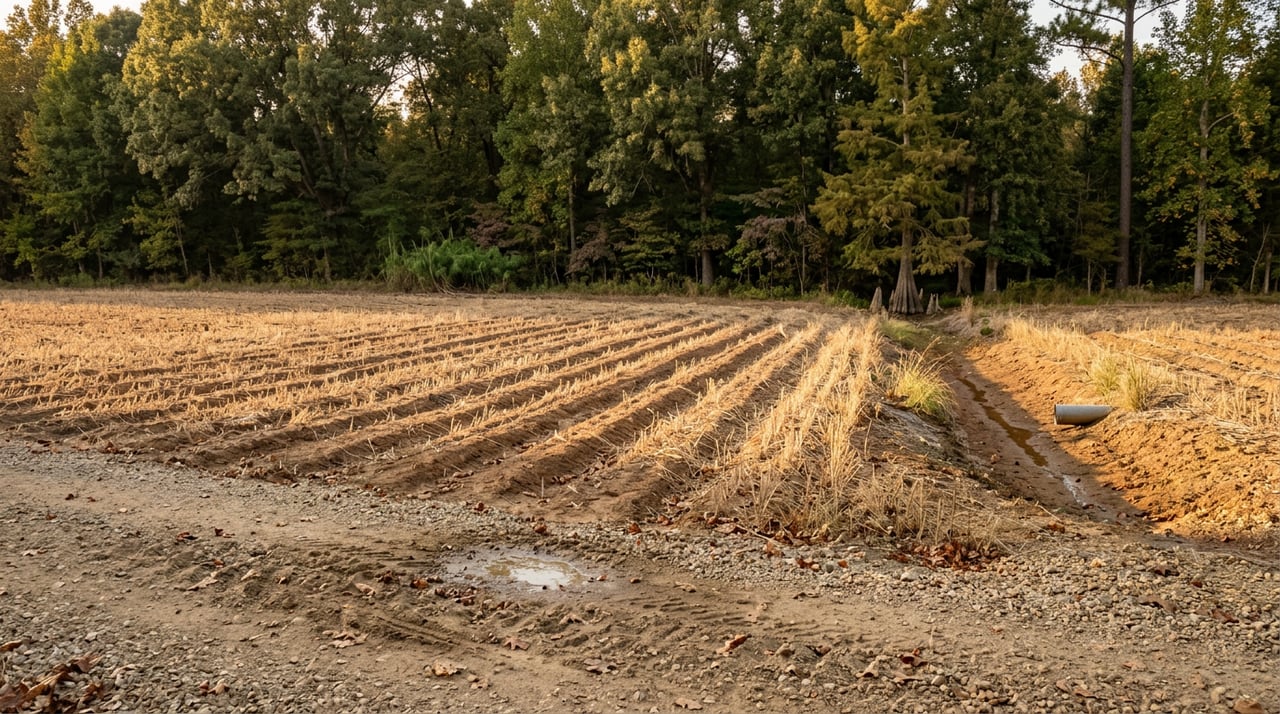
For you as a buyer, that means elevation, drainage, and road placement should be treated as core value drivers. A beautiful tract can become much harder to use and improve if water movement was never properly evaluated.
What to Review Before Closing
A careful review up front can help you avoid expensive surprises later. It can also help you prioritize the right improvements in the right order.
- Soil maps for crop, timber, and building limitations
- Flood maps and any signs of backwater exposure
- Existing drainage patterns across the tract
- Elevation changes that affect access and use
- Current road locations and likely all-weather routes
Balance Hunting With Long-Term Value
A legacy property usually works best when it is managed for more than one outcome. In Tensas Parish, that often means combining hunting appeal with timber strategy, conservation value, and agricultural optionality where the land supports it.
The LSU AgCenter describes family forests as land managed for family legacy, wildlife, aesthetics, conservation, hunting, and recreation. Its guidance also explains that multiple-use forest management can balance environmental, social, and economic factors. In simple terms, your property does not have to be just a hunting camp or just a timber asset.
That is especially important in a parish with a strong agricultural base. The 2022 Census of Agriculture reported 192,143 acres of cropland and 28,092 acres of woodland in farms in Tensas Parish. Leading crops included soybeans, corn, cotton, rice, and sorghum.
USGS also reported that agricultural uses accounted for 97% of total water withdrawals in the parish in 2014. For a buyer planning long-term ownership, that points to the importance of soils, drainage, and water management when evaluating future flexibility.
How a Mixed-Use Plan Can Work
A well-planned tract can support several goals at once without forcing you to choose one path too early. That kind of flexibility can be valuable for both enjoyment and resale.
- Hardwood areas may support wildlife habitat and recreation
- Well-suited soils may preserve future crop potential
- Managed timber can add periodic income opportunities
- Wet areas may still contribute strong recreational value
- Thoughtful access can help every part of the tract function better
Use Timber Management as a Legacy Tool
Many buyers think of timber work as a separate issue from hunting value, but in reality the two often support each other. LSU AgCenter guidance notes that timber management can sustain production continuity while creating an environment conducive to hunting and recreation. That makes timber planning part of the long game, not just an investment spreadsheet exercise.
The same guidance points to practical tools like intermediate harvests and understory work. Those steps can generate periodic income and improve financial potential while maintaining wildlife habitat. On the ground, that means selective improvements may help your land mature into a stronger family asset over time.
Instead of viewing thinning or habitat work as a cost with no return, it often helps to think of those decisions as part of a phased property plan. When done thoughtfully, they can improve usability, support wildlife, and keep future options open.
Improve the Property in Phases
The best legacy tracts are rarely built all at once. In most cases, the smarter approach is to understand the land first, solve the major access and drainage questions second, and then add improvements in stages.
That approach lines up with local guidance. LSU AgCenter notes that prescribed fire can be one of the most inexpensive aids to forest and wildlife management, but it also requires advance notification to the Louisiana Office of Forestry along with attention to smoke management and erosion control. NRCS also emphasizes that conservation planning should be site-specific and should protect soil, water, plant, and animal resources while keeping the land productive.
For most buyers, a phased approach keeps you from overbuilding too early. It also gives you time to see how the property responds through wet and dry periods before making larger investments.
A Practical Improvement Sequence
If your goal is to build a property your family can enjoy for years, this sequence can help you think clearly about priorities.
- Inventory the tract, including soils, timber, water, and access.
- Review flood exposure, drainage, and elevation patterns.
- Improve roads and entry points where dependable access matters most.
- Plan habitat and timber work based on site conditions.
- Add water-control or recreational improvements over time, not all at once.
Know the Current Hunting Rules
In a legacy purchase, management plans need to line up with current regulations. That is especially true in Tensas Parish.
LDWF says Tensas Parish is in a CWD control area. Feeding and baiting restrictions apply in control areas, deer carcass movement is restricted, and hunters cannot bring whole deer out of the area. LDWF also says deer hunters must obtain deer tags.
If waterfowl is part of your plan, LDWF says migratory bird hunters need HIP certification and a Federal Duck Stamp. The agency also offers free assistance to private landowners interested in managing property for waterfowl.
Because seasons and zone boundaries can change, current LDWF regulations should guide your planning each year. That is an important detail if you are building a long-term management strategy around deer or duck hunting.
Think Beyond the First Season
A legacy hunting property should still make sense after the excitement of the first season wears off. The strongest tracts usually combine usable access, realistic improvement potential, and a management plan that respects the land’s natural conditions.
In Tensas Parish, that often means looking closely at how the property fits into a larger hunting and agricultural landscape. It also means being honest about what the land can do now, what it could do later, and what it will take to get there.
When you buy with that mindset, you are not just chasing a short-term hunting setup. You are building a place that can carry recreational use, practical land value, and family meaning for years to come.
If you are looking at hunting land in Louisiana and want clear guidance on tract layout, land use, and long-term potential, Stedman Ulmer Properties can help you evaluate the opportunity with an experienced land-focused perspective.
FAQs
What makes Tensas Parish a strong location for legacy hunting land?
- Tensas Parish combines hardwood forests, fertile soils, oxbow lakes, abundant wildlife, and a well-known hunting landscape shaped by major public hunting areas like Tensas River National Wildlife Refuge and Buckhorn WMA.
What should buyers review first on a hunting tract in Tensas Parish?
- Buyers should start with soil maps, flood maps, drainage patterns, elevation, and access because those factors strongly affect how the land can be used, improved, and held over time.
How large should a legacy hunting property be in Tensas Parish?
- There is no single ideal size, but the tract should be contiguous enough to support your goals for access, habitat, timber planning, and possible agricultural use.
Can a Tensas Parish hunting property also support timber or farm value?
- Yes, LSU AgCenter guidance supports multiple-use management, and local agricultural data shows the parish has significant cropland and woodland, which can help preserve long-term flexibility depending on soils and drainage.
What deer hunting rules apply to Tensas Parish landowners and hunters?
- LDWF says Tensas Parish is in a CWD control area, so feeding and baiting restrictions apply, deer carcass movement is restricted, whole deer cannot be moved out of the area, and deer hunters must obtain deer tags.
What is the best way to improve a hunting property in Tensas Parish over time?
- A phased plan usually works best: inventory the land first, address drainage and access next, and then add habitat, timber, and water-related improvements based on how the property actually functions.