Are you weighing whether to keep family timberland in Amite County or sell it while prices feel favorable? You are not alone. Many heirs and long-time owners are trying to balance cash needs, legacy goals, and what the market will pay today. In this guide, you will learn the key signals to watch, what your trees might be worth, the tax rules that change your net, and practical options short of a full sale. Let’s dive in.
Quick answer and top signals
The right choice depends on your timber, your timeline, and your goals. If your stand is near sawtimber size and local demand is firm, selling part or all could make sense. If trees are still growing into higher-value products, holding and managing can build more value. The checklist below will help you decide with confidence.
Current price snapshot
Across Mississippi, stumpage prices have been volatile, with a clear split between sawtimber and pulpwood. MSU Extension reported statewide average pine sawtimber stumpage near $21.73 per ton in Q2 2025, while pine pulpwood averaged much lower, often around $2 to $4 per ton in recent quarters. These are statewide averages, not Amite County quotes, but they set expectations for product differences according to the latest extension update.
Local mill demand in Amite County
Mill proximity matters because shorter hauls and more outlets can lift stumpage bids. The sawmill project in Gloster was planned to process roughly one million tons per year, which is a positive signal for local sawtimber and chip-n-saw demand as procurement ramps up. Effects build over time and still follow broader industry cycles, but more local capacity usually supports stronger competition for logs as outlined by the Mississippi Development Authority.
Your goals, timing, and liquidity
If you need near-term cash, a thinning or selective sale can raise funds without ending the rotation. If family legacy and recreation matter most, holding and managing the stand may be the better path. Either way, your next step is a local timber cruise so you can match a sale or hold decision to what your trees will realistically deliver.
How timber value is built here
Product mix and mill distance
Trees that make sawtimber or chip-n-saw usually sell for more than pulpwood. Value also moves with delivered log demand, which is strongest where mills compete for wood. In Amite County, the Gloster facility is a helpful outlet, but prices still reflect wood quality, distance to mills, and competition on bid day.
Stand age, species, and management
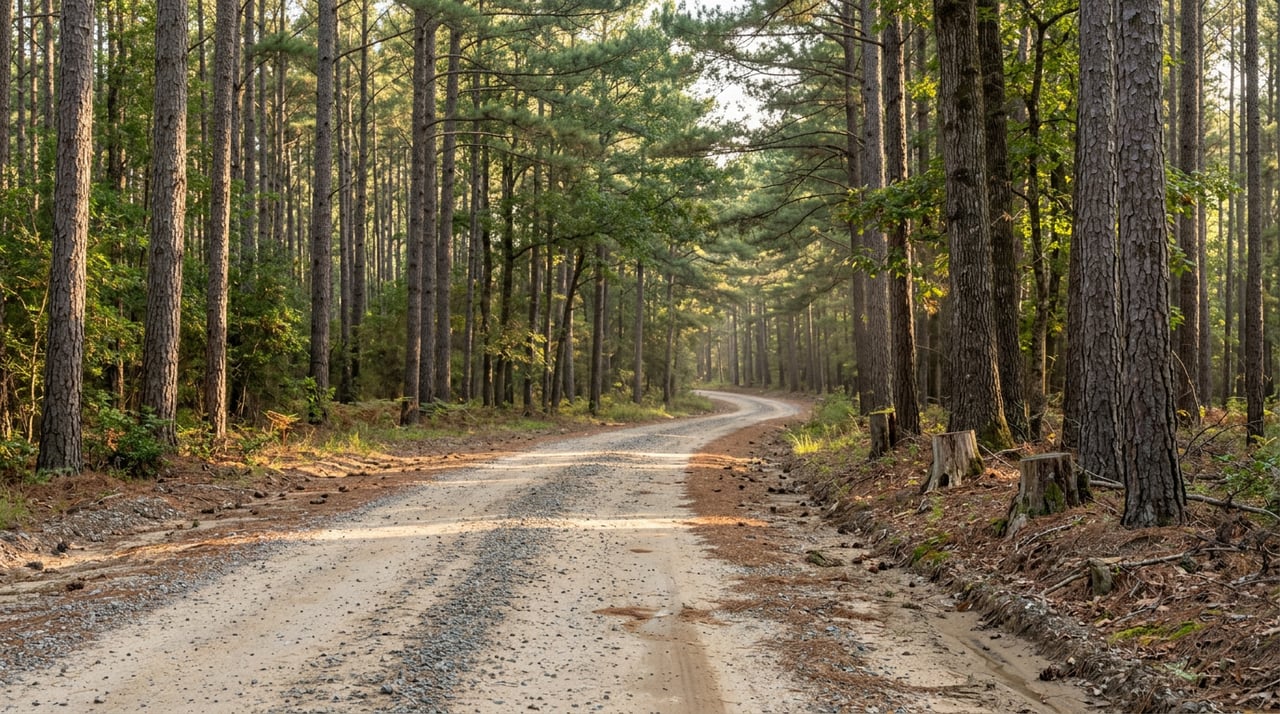
Most local pine rotations reach final harvest in the mid-20s to 30s years, with thinnings scheduled by tree size, stand density, and site conditions. If your stand is immature for sawtimber, time and proper thinning can increase value. Mixed pine-hardwood stands can diversify your product options, but they also complicate marketing and require a forester’s plan to capture the best grades per MSU Extension’s family forest guidance.
Access, parcel size, and rights
Poor road access, wet crossings, or very small tract sizes can reduce bids because harvest and hauling cost more. Title and timber-rights issues also matter. In some Southwest Mississippi deeds, timber rights were severed decades ago. Before you market timber or land, confirm who owns the timber rights and whether any old cutting contracts limit your options.
When holding makes the most sense
Holding can be the right call if your trees are still growing into higher-value products, or if you want to keep the land for family recreation and legacy. The Gloster mill’s ramp-up is a favorable demand signal for sawtimber in the area, which can support patient management. Good silviculture, including timely thinning and health checks, helps increase future log quality and value per Extension’s management playbook.
Income options without selling the land
- Thinning revenue: A well-timed thinning generates cash now and improves growth for the best trees that remain. It can also reduce fire and pest risk.
- Hunting leases: Annual lease income can help cover taxes and light upkeep. Treat it as supplemental cash flow rather than a replacement for a sale as Extension suggests.
- Conservation easement: If legacy is the priority, a conservation easement can monetize development value through a sale or donation while keeping the land in family hands. It requires appraisals and legal work but can meet long-term goals with groups like the Mississippi Land Trust.
- Forest carbon projects: Carbon contracts pay for verified changes in forest management, often requiring multi-decade commitments and monitoring. These can fit long-term owners who do not need quick liquidity as seen in active regional projects.
When selling timber can be smart
If your pine has reached sawtimber size, or pests and storms create risk that outweighs further growth, a sale can lock in value. Owners who want to simplify estates or reallocate capital may also favor selling timber or the land itself.
Thinning vs final harvest
- Thinning: Pros include near-term cash, healthier residual stand, and the option to capture higher-value logs later. Cons include smaller immediate proceeds and the need for careful marking and supervision.
- Final harvest: Pros include the largest immediate check and a clean slate for reforestation. Cons include replanting costs, the loss of near-term recreation cover, and the need to time the market. A consulting forester can design a sale that fits your tract and the market using Extension’s best practices.
Biological and weather risks
Southern Pine Beetle and other pests can force quick decisions. Mississippi agencies track and advise on prevention and salvage; heavy outbreaks can depress local prices in the short term and add replanting costs according to MSU Extension’s guide. Hurricanes and severe storms can also trigger salvage conditions that temporarily increase supply and pressure prices. If your tract has fresh damage, a prompt, well-structured sale may still salvage value.
Taxes that change your net
Mississippi severance and ad valorem rules
Growing, standing timber in Mississippi is not subject to ad valorem property taxes. A timber severance tax applies at harvest or first point of sale, and purchasers typically handle reporting. Understanding these mechanics helps you forecast net proceeds and avoid filing issues see state code details.
Federal timber-sale taxes and reforestation incentives
Many timber sales qualify for capital-gain treatment under IRC section 631, and Form T is used to track timber accounts, depletion, and elections. The details matter, which is why you should model options with a CPA before you sell per IRS Publication 544 and Extension’s timber tax overview. If you plan to replant, federal deductions and Mississippi’s reforestation credit can reduce your after-tax cost to establish the next stand.
Estate planning for heirs
For families managing inherited timberland, stepped-up basis rules, federal estate thresholds, and your harvest plan all affect outcomes. Federal estate guidance changed in 2026, so confirm the current exclusion amounts and filing thresholds with your advisor and review the IRS’ latest updates.
Local land value context
Public asking prices for hunting and timber tracts in Amite County often show a wide range, frequently in the mid $3,000 to $6,000 per acre band depending on size, access, and timber quality. Treat these as directional, not guarantees. Closed-sale data or an appraisal will give you a more reliable number for your tract sample listings illustrate the range.
What to do next: a simple plan
- Get a timber cruise and written appraisal. You need current volume by product class to estimate stumpage realistically. A local consulting forester will account for species, quality, and haul distances as Extension recommends.
- Confirm title and timber rights. Make sure there are no severed rights or old cutting contracts that limit control.
- Seek competitive bids. Have your forester solicit multiple buyers, compare lump-sum vs pay-by-scale offers, and use a strong contract with performance and payment protections.
- Model taxes before you sell. A CPA who knows timber can evaluate section 631 options, Form T, and reforestation incentives so you keep more after tax using Extension’s tax overview.
- Align with legacy goals. If your family wants to keep the land, explore an easement or carbon project early. Both take time and require specialized appraisals and legal review.
- Balance cash and growth. If you need liquidity, consider a partial harvest now and hold your best trees for future sawtimber.
Work with a team that knows timber and Amite County
Selling or holding timberland is not just about price. It is about product mix, timing, taxes, and the contract you sign. Our team combines deep real estate experience with land and forestry expertise, including a Mississippi Registered Forester, to help you read the Amite County market, structure a sale, or set a management plan. If you want a clear, local plan that fits your goals, reach out to Stedman Ulmer Properties to start a conversation.
FAQs
How do I estimate my Amite County timber value?
- Start with a current cruise from a consulting forester, then test the market with competitive bids; use statewide price reports only as a benchmark, not a quote per Extension’s tax and pricing guidance.
Will the Gloster sawmill raise my stumpage price?
- More local capacity can improve competition and support higher sawtimber bids over time, though actual prices still depend on product mix, wood quality, haul distance, and broader market cycles per the state’s sawmill announcement.
What taxes apply if I sell timber?
- Mississippi imposes a timber severance tax, and many sales can qualify for federal capital-gain treatment under section 631 with Form T reporting; model options with a timber-savvy CPA before selling see the state code and IRS Publication 544.
Can I get income without selling the land in Amite County?
- Yes; options include a thinning, a hunting lease, a conservation easement, or a forest carbon project, each with different timelines and obligations see Extension guidance and regional program examples.
What risks should I watch before I decide?
- Monitor forest health and weather exposure; Southern Pine Beetle outbreaks and storm damage can force salvage decisions and affect short-term prices per Extension’s forest health guide.