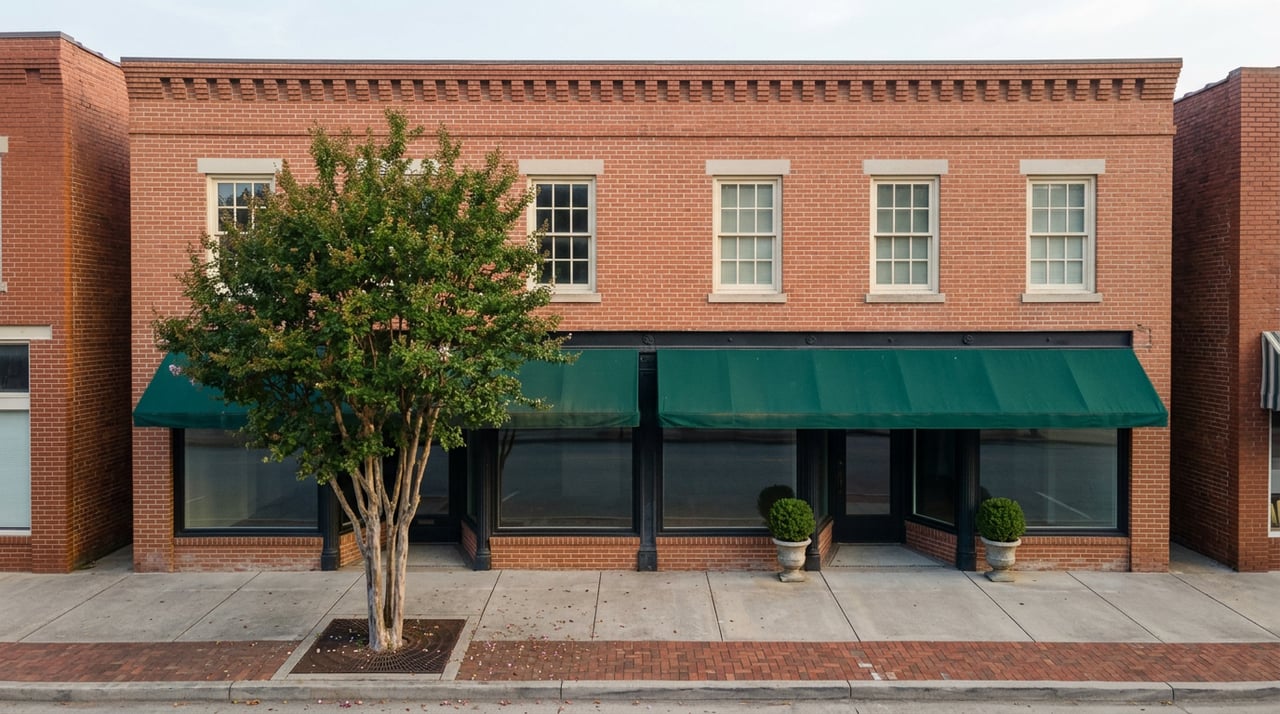
A buyer pulls up Tensas Parish on a land portal in August 2026 and sees the same headline everywhere. Median list around $6,125 an acre on land.com. Average closer to $5,886 on LandSearch. Property tax at roughly 0.29 percent, one of the lowest effective rates in the country.
Then the buyer looks at three actual listings and the per-acre numbers range from $3,750 to well over $10,000. The headline never moves. The tracts do.
Start with the levee, not the listing
The first question in Tensas Parish is not price. It is where the tract sits relative to the Mississippi River mainline levee. Land behind the levee, on the batture side, floods when the river comes up. That is the arrangement, not the exception. Yucatan Lake tracts, some of the acreage between Waterproof and the river, and parts of the Buckhorn margin all take water on the river's schedule.
Public-land experience makes this concrete. Buckhorn Wildlife Management Area, the 11,121-acre LDWF tract 14 miles west of St. Joseph, is described by the Louisiana Department of Wildlife and Fisheries and by birding groups tracking it as entirely subject to backwater flooding from the Tensas River, which is why access is regularly a problem for permit holders. A private tract sitting next to Buckhorn inherits some version of that hydrology. Buyers who tour in October see high, dry, huntable ground. Buyers who close in October and drive out in February can find the same road three feet under.
Four prices stacked into one per-acre number
The Tensas per-acre figure is really four prices layered together. Underwriting one component at the blended number means overpaying for whatever is thin and getting the rest for free. Or the other way around.
| Component | What it produces | Rough 2026 pricing signal |
|---|---|---|
| Tillable Delta row crop | Cash rent income | $3,750–$6,000/ac list; ~$140/ac Delta cash rent |
| Refuge-adjacent habitat | Trophy deer, waterfowl, WRP payments | Premium over ag comp; turnkey lodges push above $10,000/ac |
| Lake Bruin frontage | Waterfront use, resale liquidity | Priced by linear foot, not by acre |
| Behind-the-levee acreage | Seasonal hunting, timber, no year-round build | Discount vs. front-side ag |
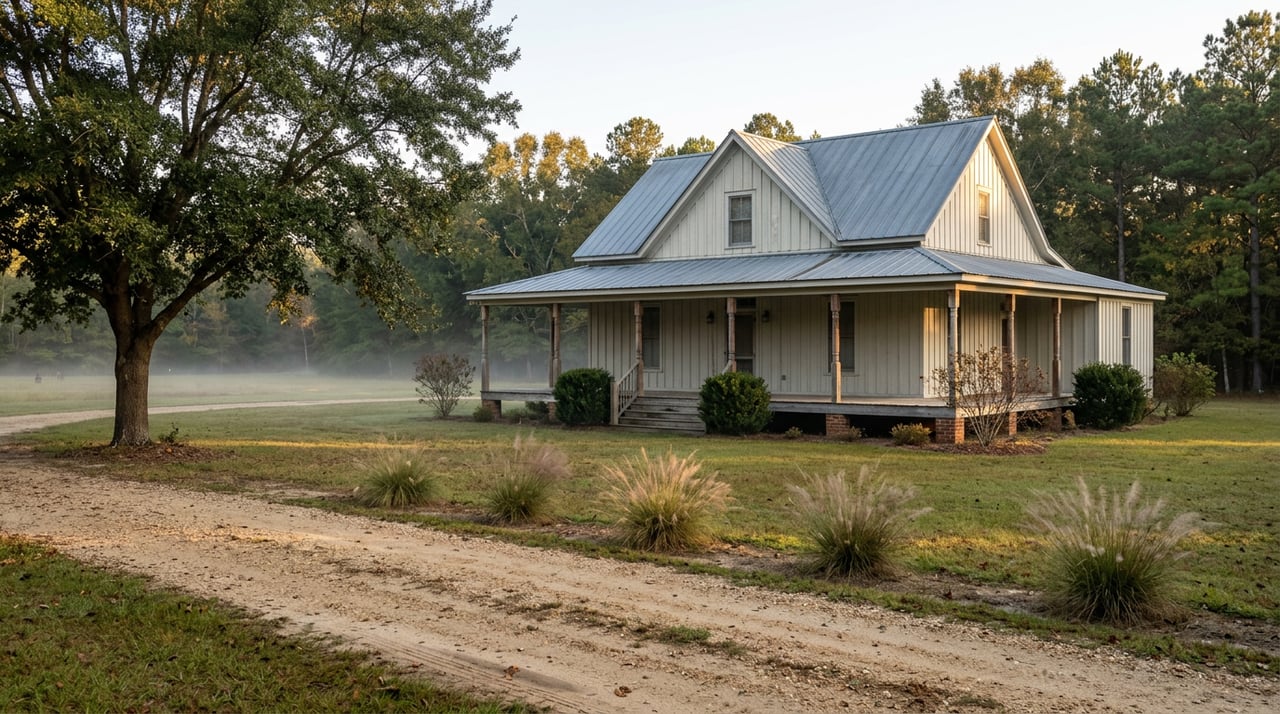
Every tract in Tensas Parish is some blend of these four. A 75-acre Waterproof listing marketed at $3,750 per acre is almost pure column one. A 1,050-acre turnkey with a 4,650-square-foot lodge a quarter mile from the Tensas River National Wildlife Refuge is mostly column two with column one attached. A 1.2-acre place with 103 feet on Lake Bruin is column three and nothing else.
Tillable ground and the 2026 rent math
Cash rent is the honest yardstick for row-crop value, and the 2026 number is under real pressure. LSU AgCenter economist Michael Deliberto, in reporting published in May 2026, put the seven-parish Louisiana Delta cash rent average at $140 per acre and Louisiana's all-in corn production cost near $6.05 per bushel on 190-bushel corn. Diesel went from $2.85 a gallon in early January 2026 to $4.87 by late April. Rice under continuous flood in this region burns about 35 gallons of diesel per acre across a season.
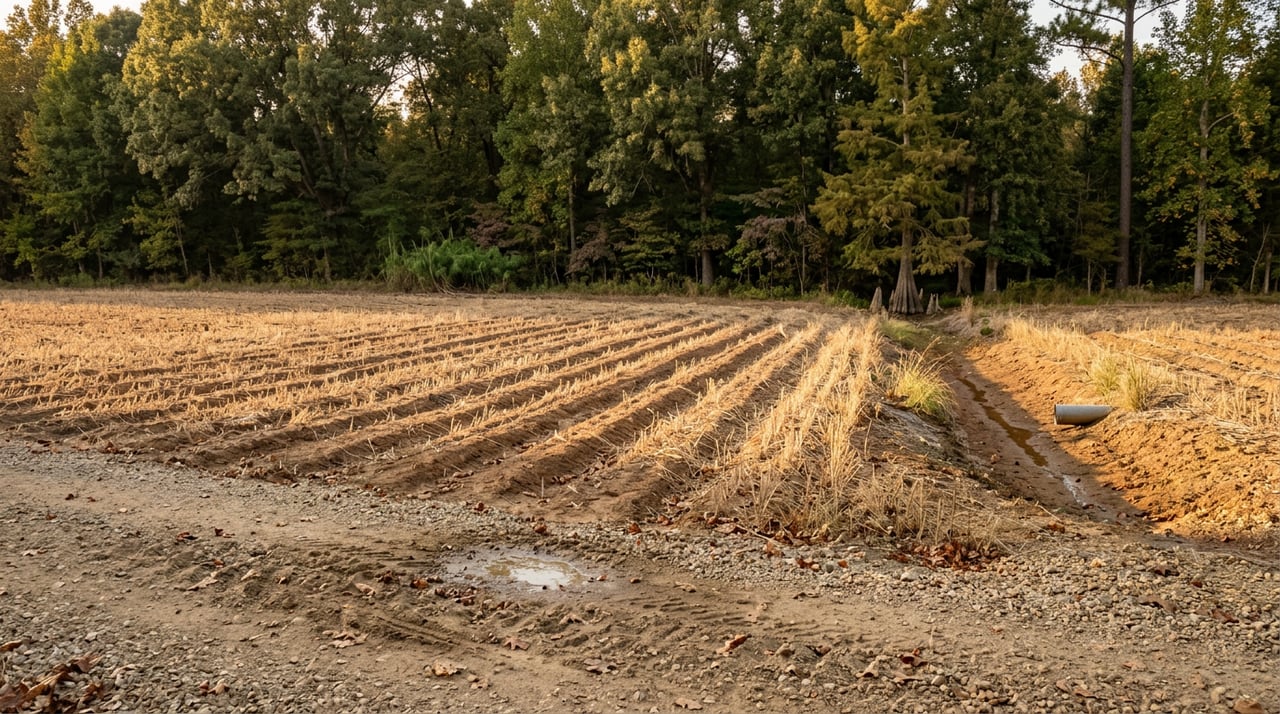
Run that against the listings. A 75-acre tract at $3,750 an acre, currently rented at $100 per acre, produces a gross yield near 2.7 percent before taxes and management. Push the same rent to $140 on higher-quality ground listed at $6,125, and the yield sits closer to 2.3 percent. Neither number is bad for a Delta buyer who values the land for reasons beyond the check, but a buyer underwriting purely on rent needs to interrogate three things:
- Is the rent locked, verbal, or family-rate? A relative paying $100 in a $140 market is not a comp.
- Is the irrigation in place, and who owns it? Electric wells, poly pipe, and precision leveling for furrow or flood are real capex. Non-irrigated ground rents lower and is more exposed to a bad July.
- What is the FSA base acreage and program history? That travels with the deed and affects future rent.
Refuge-adjacent habitat is a separate price
Column two is where Tensas earns its national reputation, and where the per-acre number decouples from any farm math. Tensas River NWR runs to about 74,622 acres of bottomland hardwood forest, the largest remaining tract of its kind in the Mississippi Alluvial Valley, and holds the state's largest population of Louisiana black bear. Buckhorn WMA sits adjacent. Big Lake WMA sits to the north. The result on the ground is 100,000-plus acres of contiguous public habitat that concentrates deer and waterfowl onto the private tracts that share fence lines.
Louisiana Sportsman, working from LDWF managed-hunt data, has reported Buckhorn producing roughly one deer per 4.9 hunter efforts on the two-day managed hunts, which ranks it among the top handful of WMAs statewide for efficiency. Private ground on that border, managed under WRP or on a private lease, has a track record of 160-inch bucks and 250-pound body weights. That is the payload a lodge-and-blind buyer is actually purchasing, and it is what pushes a Whitetail Properties turnkey with improved duck holes and 150 acres of managed waterfowl habitat past $10,000 an acre in a parish whose farmland median is barely $6,000.
Two diligence points earn their keep here. First, the public permit for Tensas NWR runs $20 per person through tensas.isportsman.net, with lottery applications open August 1 to September 30, and neighboring landowners often treat the refuge as their pressure map. Second, WRP enrollment is a benefit and a constraint at once. It caps buildable footprint, restricts certain uses, and stays with the parcel. Buyers who plan to build a lodge on a WRP-encumbered tract need to know which acres are out of the program before they wire earnest money.
Lake Bruin is a market of its own
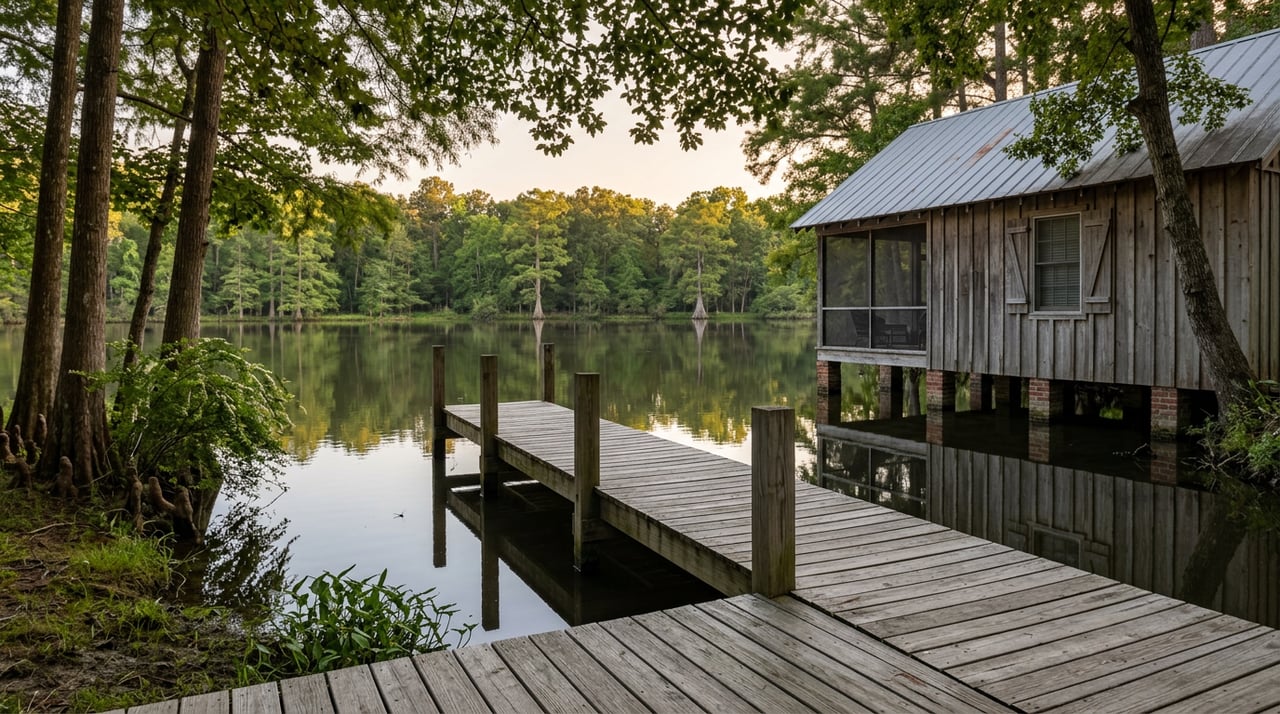
Column three does not price in acres at all. Lake Bruin is a 3,000-acre oxbow of the old Mississippi channel, roughly 12 miles long, half a mile wide, averaging 20 to 30 feet deep with holes past 55 feet, and Louisiana State Parks describes it as unusually clear water for the Delta. That combination of depth, clarity, and cypress-lined bank produces a linear-foot pricing convention that behaves nothing like ag or timber comps. A one-acre lot with 100 feet of frontage and a 1970s house is priced against a bare 200-foot lot down the road, not against a 500-acre soybean field on LA 605.
The lake's calendar also feeds resale liquidity. Netterville's Landing on the north side of the lake hosts the Thunder on Bruin airshow, the 4th of July Flotilla and Poker Run run each summer, and Lake Bruin State Park at 201 State Park Road in St. Joseph draws visitors from I-20 through the season. Buyers who want a Delta camp with weekend depth of use, and who plan to hold for eventual resale, get a shallower market on Lake St. Joseph or Lake St. John and a much deeper one on Bruin.
Reading three listings against the four columns
- A 75-acre Waterproof farmland tract at $3,750 per acre, 5 miles north of Clayton on Hwy 571, with a 6-inch electric well and a $100-per-acre family lease, is column one plus a soft column-two option because the surrounding woods hold small game. Underwrite it as farmland with a hunting kicker, not the other way around.
- A 511-acre WRP tract bordering the physically challenged section of Buckhorn WMA, 26 years into intensive deer management, with two furnished camps and a walk-in cooler, is column two carrying a very small column one. The per-acre number should compare to other refuge-edge tracts, not to tillable ground three miles east.
- A 1.2-acre mobile-home place on Highway 605 with 103 feet on Lake Bruin, 6 miles north of St. Joseph, is column three. It is priced against Bruin frontage and against the Buckhorn Subdivision camp lots on Mucklerath Road, not against Delta cropland at all.
The friction most out-of-parish buyers do not price in is the fourth column, which is where the levee runs. Backwater flooding is not a defect disclosure in the usual sense. It is a use restriction. A tract that takes water in high-river years cannot be built on year-round, cannot be leased at full ag rent, and cannot be insured the way front-side ground can. It can still be an excellent duck lease and a legitimate timber hold. It just cannot be the primary residence a buyer thought they were buying.
Short FAQ
How much of Tensas Parish sits behind the mainline levee? A meaningful share of the acreage between US 65 and the river, including tracts around Yucatan Lake and portions bordering the WMAs, is in the batture or in backwater zones tied to the Tensas River. Any listing that touches those hydrologies should be walked with someone who has seen it at both high and low water.
Is the 0.29 percent property tax rate the same across every use? The effective rate on rural acreage is low, but agricultural use, timber, and homestead status each change the calculation. A tract that transitions from row crop to residential build changes its assessment. Confirm the current classification with the Tensas Parish assessor before you underwrite the carry cost.
What is the practical difference between Tensas NWR and Buckhorn for a neighboring landowner? Tensas NWR is federal, uses the iSportsman permit system, and holds bear. Buckhorn is state, has broader ATV access on designated trails, and floods more readily. Deer move differently against each border. A tract's proximity is a fact. Its usable adjacency depends on which side.
Next step
Every Tensas Parish tract we work through with buyers gets decomposed the same way, column by column, before we talk about price. If you are looking at a listing here or comparing several, Stedman Ulmer Properties can walk the tract with you, pull the levee and WRP overlays, and tell you which of the four prices you are actually paying. Search available listings or contact the team when you are ready.